Oracles: Giving Blockchains Eyes and Ears
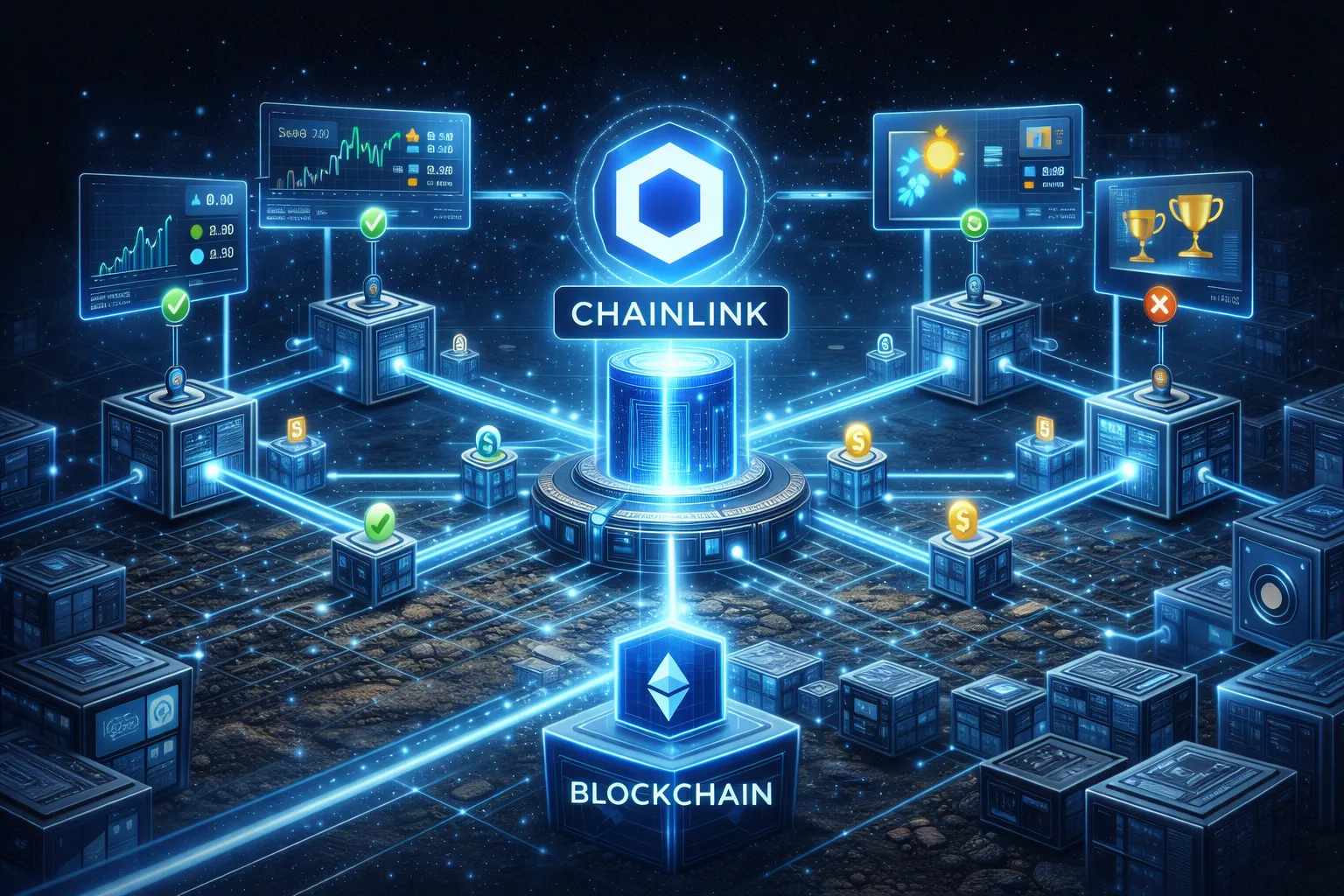 Smart contracts gave blockchains the ability to react to on-chain events. They introduced rules that execute automatically, deterministically, without permission. But for all their power, smart contracts were blind. They could only see what lived on the blockchain itself: balances, transactions, contract state. Everything else, prices, weather, elections, sports results, interest rates, shipping updates, existed outside their world. And without a way to observe those events, smart contracts were trapped in a closed system.
The Problem: A World Outside the Chain
Blockchains are isolated. Isolation is what gives blockchains their security guarantees. Every node independently verifies the same data: no assumptions, no trusted intermediaries. But isolation comes at a cost. A smart contract cannot ask Google for a price. It cannot check tomorrow’s weather. It cannot know whether a shipment arrived or a game ended.
The obvious question is why smart contracts couldn’t simply call an external API and be done with it. The answer is trust. The moment a contract depends on a single external system, control quietly returns to whoever operates that system. The problem was clear and fundamental:
How do you allow blockchains to react to real-world events without breaking the very properties that make them trustworthy?
That problem gave birth to oracles.
What Is an Oracle?
An oracle is a mechanism that brings external information onto the blockchain in a way that smart contracts can use. At a high level, an oracle answers a simple question: “What just happened outside the chain?” But the challenge is not fetching data. The challenge is doing it credibly. If a single server provides the answer, you have simply recreated a trusted intermediary. The smart contract may be decentralized, but its inputs are not. Garbage in, garbage out.
A useful oracle must solve three things:
- Data sourcing: where the information comes from
- Verification: how the network knows the data is accurate
- Delivery: how the data is made available on-chain
This is harder than it sounds.
From Trusted Feeds to Decentralized Oracles
Early oracle designs were simple. A trusted entity would publish data on-chain: prices, results, metrics. This worked for prototypes, but it failed the decentralization test. Whoever controlled the feed controlled the outcome. If they went offline, the system froze. If they acted maliciously, the contract behaved incorrectly.
Decentralized oracles emerged as a response. Instead of trusting one source, the network would trust many. Multiple independent nodes fetch the same data from different sources. Their responses are aggregated. Outliers are discarded. Incentives and penalties encourage honest behavior. Truth becomes a statistical property rather than an assumption.
Chainlink and the Oracle Network Model
The most prominent implementation of this idea is Chainlink. Chainlink does not attempt to be a blockchain. It is an oracle network that sits alongside blockchains and feeds them information.
In a typical setup:
- Independent Chainlink nodes fetch data from multiple sources
- The data is aggregated using predefined rules
- The final result is written on-chain
- Smart contracts consume that result as input
Node operators are paid for accurate data and penalized for faulty submissions. Over time, reliability becomes economically enforced. This model unlocked something crucial. Smart contracts could now react to events, not just transactions. They could respond to market prices. To deadlines. To outcomes that originated outside the blockchain.
Why Oracles Matter
 At their core, blockchains are self-contained machines. They are very good at tracking what happens inside the system but intentionally isolated from the outside world. A blockchain does not know the price of ETH in dollars. It does not know whether a stock market is open. It does not know if it rained yesterday or if a shipment arrived.
Oracles allow blockchains to coordinate with the outside world. They allow contracts to react to events that happen elsewhere, while still executing deterministically once that information is brought on-chain.
Real World Example: Terra mAssets
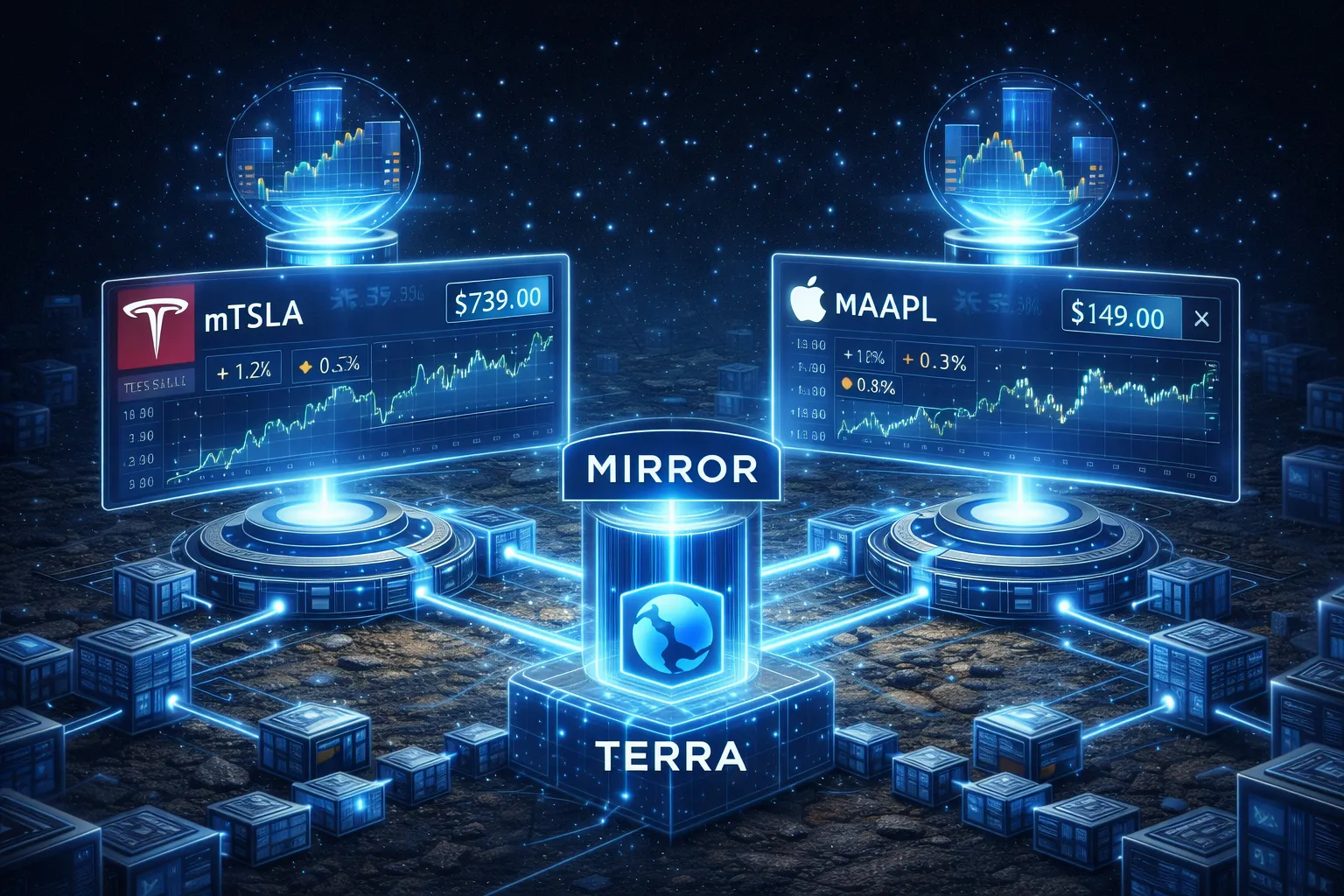
One of the clearest examples at the time of this writing is Mirror Finance on the Terra blockchain. Mirror allows users to create and trade synthetic assets called mAssets, such as mTSLA or mAAPL, which track the price of real-world stocks. The smart contracts themselves have no idea what Tesla was worth. That information came from price oracles feeding stock prices onto the chain at regular intervals.
Other Examples
On Ethereum, oracles are already widely used to:
- Feed ETH and ERC-20 prices into lending protocols
- Trigger settlements in prediction markets
- Provide reference rates for synthetic assets
On Binance Smart Chain, similar oracle feeds power:
- Token price references for lending and margin platforms
- Liquidation logic in derivatives protocols
- Stable asset pegs and collateral checks
On Polygon, oracles enable cheaper versions of the same systems:
- Price feeds for DeFi applications that could not afford Ethereum gas
- Cross-chain data delivery from Ethereum-based oracle networks
- Faster, more frequent updates for consumer-facing dApps
The blockchain enforces the rules.
The oracle supplies the context.
The Future of Oracles
As smart contracts grow more capable, oracles become more critical. Future oracle systems will not only deliver prices. They will deliver complex state, multi-dimensional data, proofs about the physical world. We are already seeing early versions of this:
- Cross-chain messaging
- Proofs of reserve
- Verifiable randomness
- Event-based triggers
