Rug Pulls: How to Avoid Falling For One
 Decentralized Finance is currently growing through the "Wild West" phase: a fast‑growing market with enormous rewards but little regulation. Anyone can launch a token or yield farm with no gatekeepers, attracting speculators with juicy APYs. Lending protocols like Aave/Compound have at times paid double‑digit yields (even briefly 17–24% APY on USDT in Dec 2023) when borrowing demand surged. Legitimate yields come from real sources: borrowers’ interest or trading fees - not “free money”. Extreme promises often signal danger. Anyone can launch a token or yield farm with no gatekeepers.
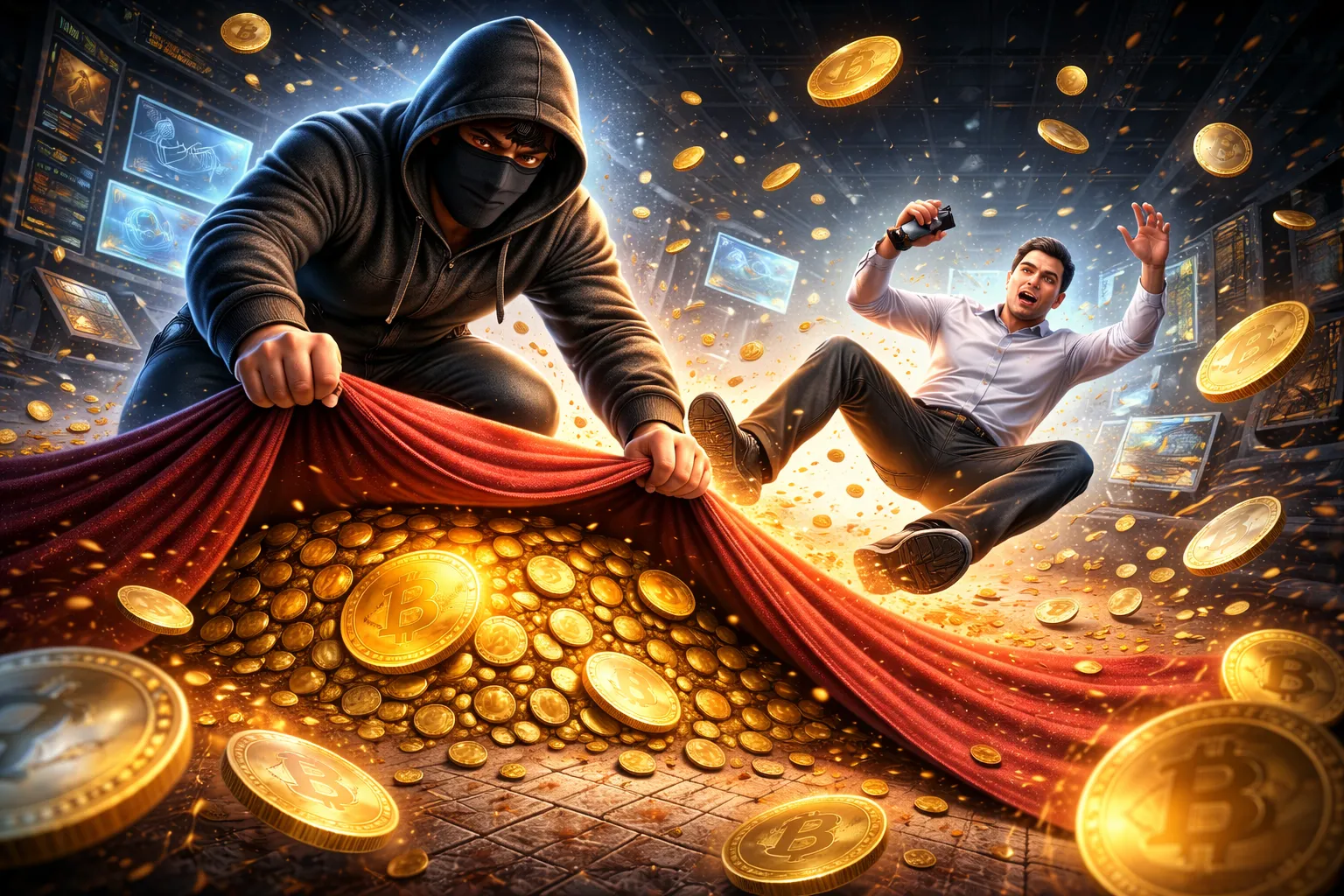
The amount of money currently locked in DeFi is attracting a lot of eye balls, and rug pulls are alarmingly common. A rug pull is a scam where developers create a project, hype it up with promises of high returns, raise funds, and then abruptly vanish with the money. TokenMetrics reports rug pulls make up about 37% of all crypto scam revenue - nearly $3 billion per year - and are especially rife in DeFi, where token listings often have “minimal oversight and regulation”. In practice, rug pulls exploit hype and FOMO: projects launch with flashy marketing and sky‑high APYs, markets pump, and then insiders suddenly dump liquidity or withdraw funds, crashing prices to zero. Because many DeFi teams are anonymous or pseudonymous, and smart contracts can be opaque, bad actors can slip away unpunished.
Notable Rug Pull Examples
- Compounder.Finance (Ethereum, Dec 2020): Promoted as a yield aggregator with audited contracts, it secretly included a “withdraw all funds” function. Twenty-two days after launch the devs triggered it and stole ~$10.8 million from investors. The site and team then vanished.
- “SQUID Game” Token (BSC, Apr 2021): A token riding the buzz of the Netflix show soared from $0.01 to ~$2,861 in days. Buyers found they couldn’t sell - developers had locked the contract. When people realized the scam, the founders dumped their holdings, crashing the price 99%. According to reports, the rug pull netted about $3.38 million.
- Luna Yield (Solana, Dec 2021): Marketed as a legitimate farming project, Luna Yield (no relation to Terra's Luna) raised ~$6.7 million in an IDO. Just three days later all funds were quietly sent to Tornado Cash (a mixer) and the team disappeared. Because the project looked professional with real partnerships, investors were caught off-guard.
These stories show that big and small projects can both blow up. Some scams are obvious, but others are subtle. For instance, BitConnect (2016–18) was essentially an on-chain Ponzi: it promised 40% per month returns and collapsed with over $2 billion lost to investors. Even respectable-sounding projects have gone bad: many victims note that fraudulent teams often use celebrity endorsements or fake documents (as in the “Bored Bunny” NFT rug pull), or employ fancy buzzwords. Ultimately, DeFi scams are variations on old financial fraud themes (pump-and-dump, Ponzi schemes, fake ICOs) – but with code and no recourse.
Spotting the Red Flags
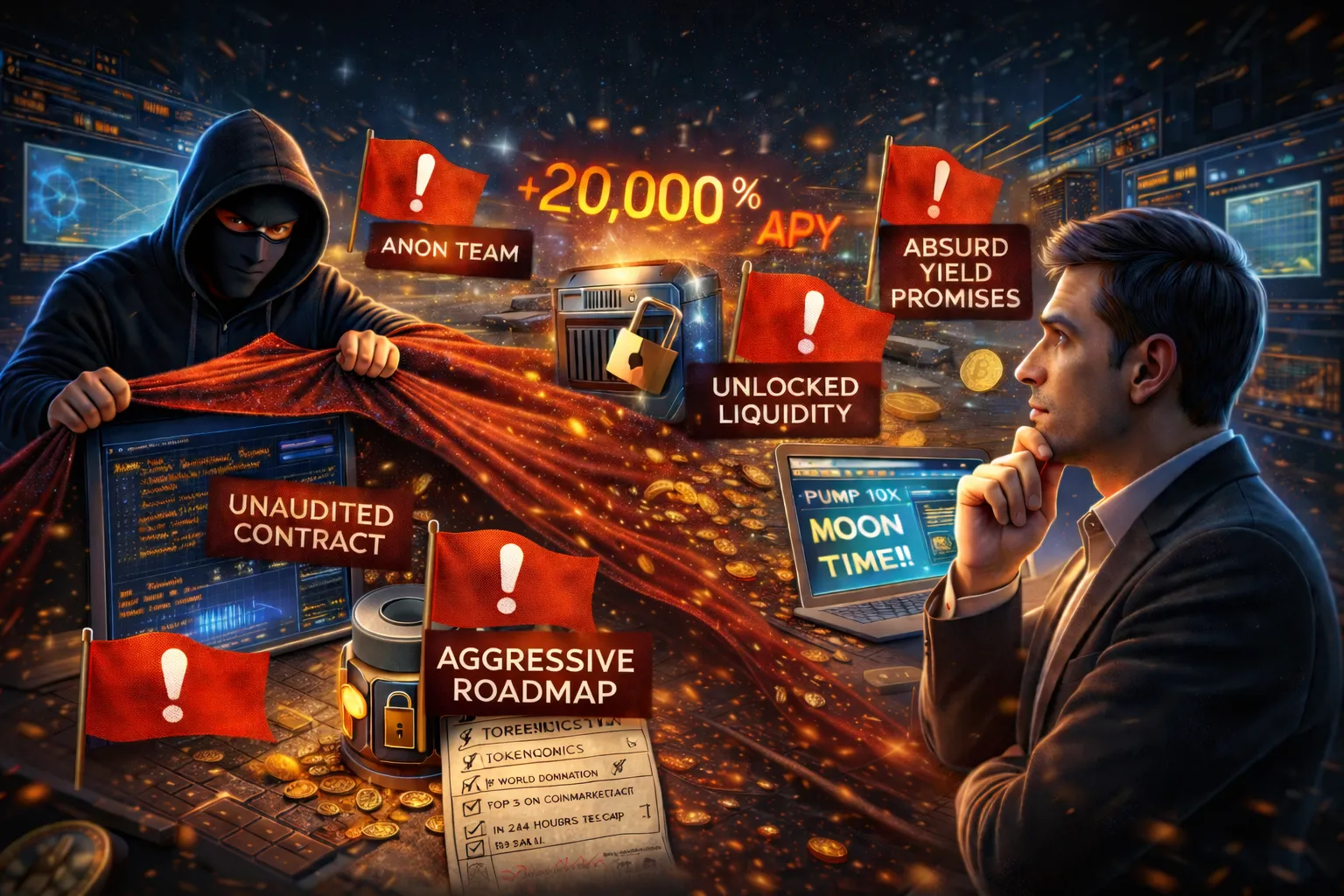 To avoid getting rug‑pulled, investors should watch for classic warning signs. Key red flags include:
- Anonymous or Unknown Team: If the founders’ identities aren’t publicly verified (no LinkedIn, past projects, or verifiable track record), treat it with suspicion. Fake profiles and purchased social followers are common in scams.
- No (or Shoddy) Audit: Legitimate projects usually undergo third‑party smart contract audits. If you can’t find a credible audit report (or the project hides any audits), be very cautious.
- Unlocked Liquidity: Check whether the project’s liquidity pool is locked or timelocked (via tools like GeckoTerminal). If liquidity is unlocked or the lock expires soon, developers could rug the pool at any time.
- Concentrated Token Holdings: Use Etherscan/BscScan to see the token distribution. If a few wallets (or the dev wallet) hold an enormous percentage of tokens, they can dump on retail investors and crash the price.
- Absurd Yield Promises: Extremely high APYs (especially hundreds or thousands of percent, or multi-digit “per day” yields) are a huge red flag. While DeFi yields can legitimately spike during demand (e.g. 17–24% APY on stablecoins at one point), sustainable returns are backed by real economic activity. Guaranteed “get rich quick” rates usually mean Ponzi or exit-scam.
- Absurd Goals and Aggressive Roadmap: Similar to yield, many rug-pull devs overpromise and under-deliver. If it looks like the protocol is promising aggressive roadmap, or to build out functionality that many more experienced dev teams have struggled to, it may be because they have no intention of actually doing so.
- Overhyped Marketing and FOMO: Be wary if a project has aggressive influencer marketing, artificial urgency (“only 1000 NFTs left!”), or shouts of “moon” and “10×” without substance. Real DeFi projects focus more on technology and community rather than hype.
- Vague Documentation: Missing, plagiarized, or nonsensical whitepapers and roadmaps are telltale. A legitimate project will explain its tokenomics and tech in detail. If the docs are vague buzzwords, that’s a bad sign.
No single red flag proves a scam, but the more of these checks fail, the riskier it is. Keep in mind that even audited or “professional” projects can rug - audits often miss malicious backdoors - so do your own due diligence too.
Vetting Projects & Staying Safe
Beyond spotting red flags, follow these best practices when navigating DeFi:
- Do Your Homework: Investigate the team’s background and track record. Read the whitepaper and code if possible, and independently verify claims (e.g. check the audit report on the auditor’s site).
- Start Small: Only stake an amount you can afford to lose at first. If a project is legitimate, you can always add more later. If it’s a scam, small tests limit your damage.
- Check Audits and Locks: Use tools or platforms to verify the audit status and that liquidity is locked. Even look at the smart contract on Etherscan – specialized services like Token Sniffer can flag obvious honeypot code.
- Monitor the Community: Legit projects have active developer communication (e.g. on Discord or Telegram) and an organic community. Shadowbanned or dead channels, or customers being blocked for questions, are red flags.
- Diversify Investments: Don’t put all your funds into one new token or farm. Spreading out means a single rug pull can’t wipe you out.
- Use Reputable Platforms: Whenever possible, use well-known exchanges or DEXes for trading. Some platforms vet projects or require KYC, adding a layer of security.
- Stay Informed: Follow crypto news and security blogs. Reporting tools and scam trackers exist (e.g. Chainabuse). If a project starts acting weird (big dumps, dev silence, negative press), pull out fast.
By combining caution with smart research, you can participate in DeFi while reducing risk. Remember that high returns require high risk. Unlike traditional finance, there are no FDIC‐style guarantees in DeFi. In a market still under‑regulated, assume you’re on your own. If a project’s promoters remain hidden or its code is opaque, it’s best to move on.
Rug pulls and crypto scams predate DeFi, but the anonymous, borderless nature of DeFi makes them even easier. DeFi is going through a gold rush, but just like in the gold-rush period in US, where there is opportunity, there will also be scammers.
