Terra and Luna: From Algorithmic Dreams to DeFi’s Darkest Day
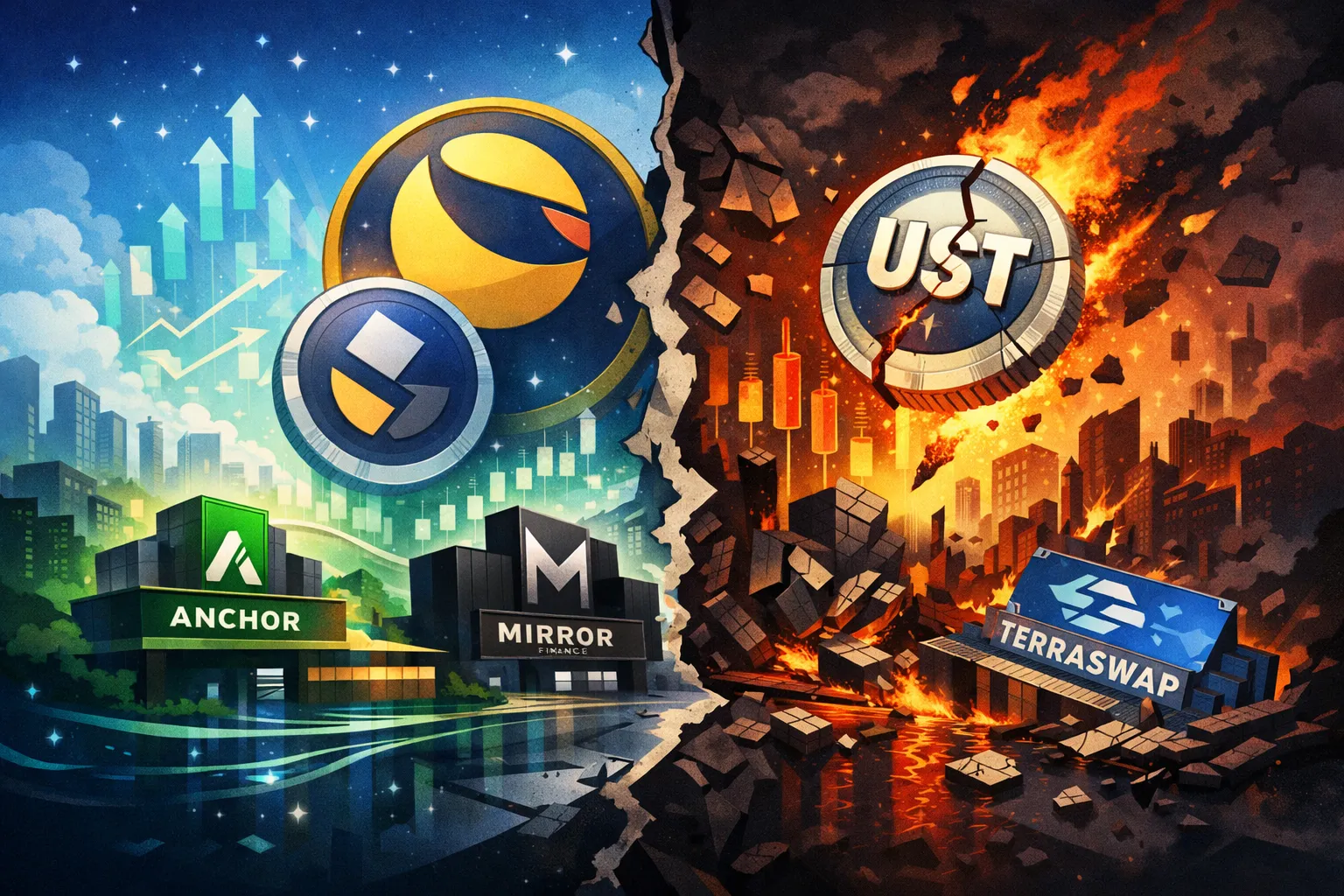 In early 2022, the Terra blockchain and its native assets stood at the center of one of the most ambitious experiments in decentralized finance. Terra was built around a simple but radical idea: a purely algorithmic stablecoin, UST, paired with a volatile asset, LUNA, that absorbed price shocks. There was no claim of hidden bank accounts or secret dollars sitting in a vault. The mechanism was explicit and on-chain. Stability was enforced through market incentives and arbitrage, not collateral. For many in DeFi, this was not a flaw but the point. An algorithmic stablecoin represented the holy grail of decentralized finance: a censorship-resistant unit of account that did not rely on banks, custodians, or governments. If it worked, it would be foundational infrastructure for a new financial system. This is why serious capital took it seriously. It is why experienced investors backed similar designs before, including Iron Finance. These were not Ponzi schemes dressed up in technical language. They were real experiments attempting to answer one of the hardest problems in finance: how to create money without trusting an issuer.
Inside the Terra DeFi Ecosystem
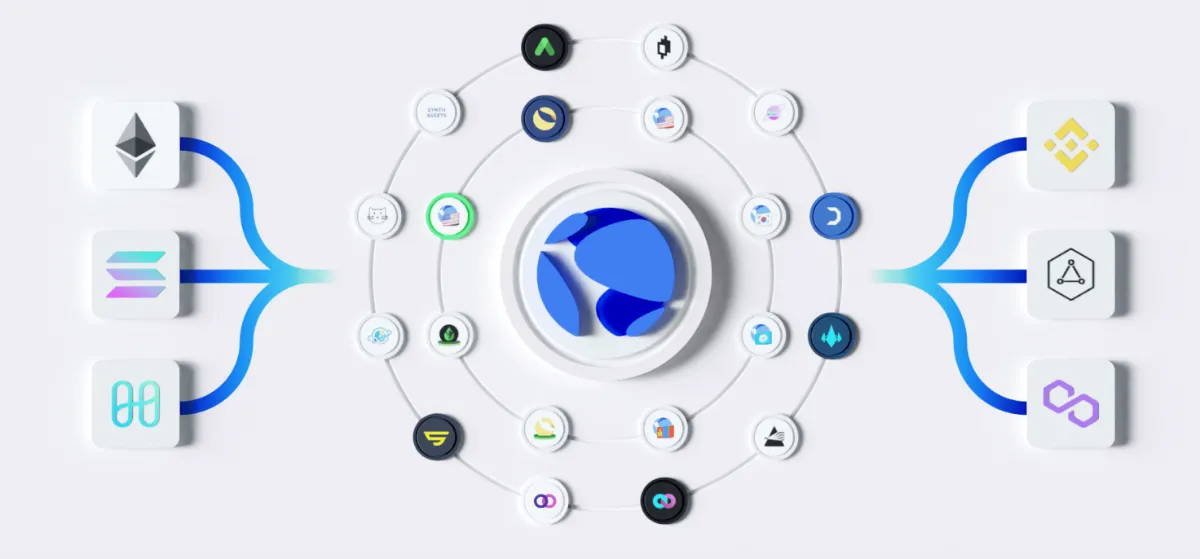 Terra’s appeal lay in its rich DeFi environment. The core protocols - Mirror, TerraSwap, Anchor, (and insurance via Ozone) formed a mini-economy. Mirror Finance let anyone create and trade synthetic “mAssets” mirroring traditional stocks (you could buy mTSLA to track Tesla, for instance). Mirror was built on smart contracts available on Terra (and Ethereum), and relied on TerraSwap, a Uniswap-like DEX, for trading. Anchor Protocol enabled staking and lending: deposit UST to earn ~20% APY in aUST, or stake LUNA for rewards, all while using Terra’s on-chain lending book. In short, Terra offered everything a yield-hungry investor loved: stablecoins to hold, cheap liquidity via TerraSwap pools, high returns from Anchor, and exotic exposure to traditional finance via Mirror. Bridges connected Terra to other networks (e.g. the Wormhole bridge letting UST flow to Ethereum, increasing UST’s footprint and liquidity pools across chains.
In aggregate, Terra’s design was a marvel of DeFi innovation on paper. But it hinged entirely on continuing confidence in UST’s $1 peg. UST had no dollar in reserve; its “value” was the market’s faith (and that 1:1 burn/mint arbitrage with LUNA). By early May, though, under the hood the system was straining. Anchor’s enormous UST holdings (over $14 billion) were mostly coming from fresh investor capital, not organic demand. Terra had tried to bolster faith by building a real reserve for UST: the Luna Foundation Guard quietly amassed 80,000 BTC (~$3B) and $200M AVAX to backstop UST if needed. But this reserve wasn’t yet integrated on-chain as a redemption option. Meanwhile, Terra’s algorithmic mechanism remained the only active peg tool.
The Death Spiral Unfolds (May 2022)
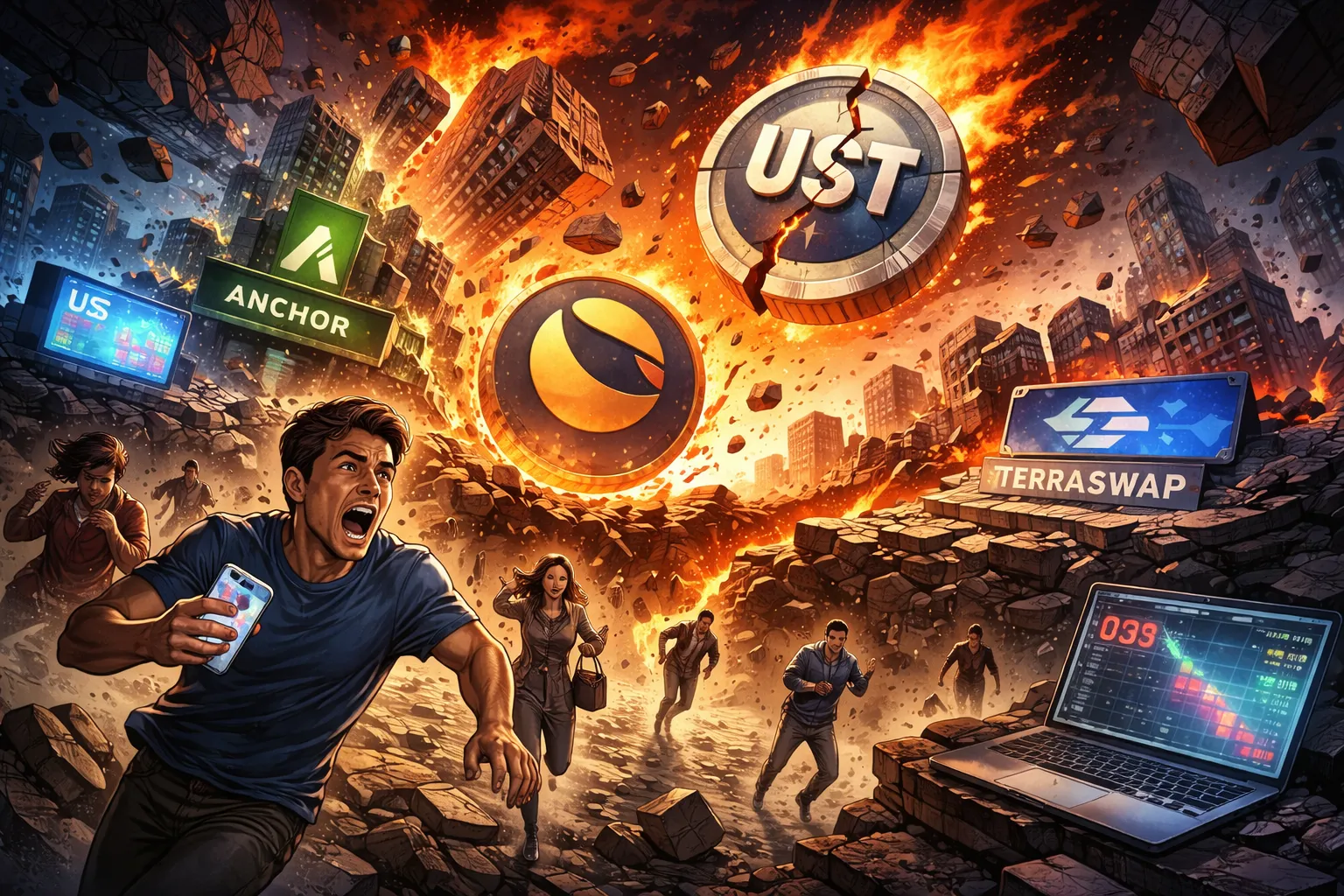 Disaster struck in early May 2022. A perfect storm of market turmoil and protocol mechanics created a self-feeding collapse. On May 7–8 (Weekend), large UST withdrawals from Anchor began. Almost $3 billion of UST flooded out of Anchor’s vaults, dropping its UST balances from $14B to $11B. Alarmingly, roughly $1B of that outflow was traced to just five addresses. Much of the withdrawn UST was bridged off-chain to Ethereum via Wormhole, to be sold for other dollar-stable assets on Curve and other exchanges. This shift unbalanced the liquidity pools: UST became the dominant coin in those pools, draining the “exit liquidity” and placing downward pressure on its price. By late Sunday, May 8, UST briefly slipped to ~$0.98. That 2% drop shattered confidence.
Panic spread quickly. Traders shorted Bitcoin and LUNA; UST holders feared further depeg. These moves accelerated the crisis in a vicious feedback loop. Over 11,000 additional depositors withdrew from Anchor, simultaneously bridging out UST to swap for safer coins. Every exit pushed UST’s price lower on external exchanges (a low of ~$0.98 Sunday). On Sunday night, Terraswap and Curve pools were heavily rebalanced – hundreds of millions were thrown back in to try to support the peg – nudging UST back to ~$0.995 momentarily. But trust was gone. Terra’s algorithm was supposed to work the other way (if UST fell below $1, LUNA could be burned for 1 UST), yet as UST sank, the system unleashed more LUNA minting, slashing LUNA’s market cap.
Luna Foundation Guard and Terraform Labs scrambled. Late Sunday, LFG’s council approved deploying $1.5 billion (half in BTC, half in UST) to defend the peg. They planned to loan $750M in BTC to market makers to buy UST, and to flood the market with $750M UST to buy BTC back. But without the on-chain redemption module live, execution was opaque. On Monday, May 9, global markets opened weak and crypto slumped further. Anchor outflows continued, driving UST down to ~$0.90 midday and then violently crashing as low as ~$0.60 by afternoon. LFG actually moved its entire $3B BTC reserve in one go, causing rumors that the market makers might have sold or otherwise drained that support. Meanwhile, Terra’s own blockchain began misbehaving – validators saw congestion and downtime, as bots spammed transactions during the frenzy.
By May 9 evening, UST was at ~60 cents and LUNA had effectively zeroed out. In just days LUNA plunged from $30 (on Friday) to fractions of a penny. On May 10, the Terra network finally halted. (Officially, validators voted to pause Terra on May 16 after an overnight 100% price crash). In a week, UST went from $1 to ~$0.04 and LUNA from $119 to essentially $0. The “algorithmic dollar” had failed completely; its price-stability architecture collapsed under stress.
Aftermath: Impact on DeFi
The fallout was immediate and far-reaching. Terraform Labs announced a controversial “Terra 2.0” fork, ditching the old LUNA (rebranded Terra Classic) and creating a new Luna. But investor faith was shattered. Anchor’s $6.5B in UST deposits evaporated – nearly all were lost or withdrawn. Mirror’s synthetic stocks found no buyers. Many projects paused or died outright as UST and LUNA went to zero. The crash inflicted the greatest loss in crypto history to date, wiping out ~$40B in market value overnight.
In traditional finance terms, Terra’s collapse was a giant contagion event. Bridge-connected chains saw temporary liquidity drains; for example, Solana (via Wormhole) had large UST flows that rapidly unwound. Centralized exchanges even intervened: Binance briefly prevented selling UST below $0.70 to stem the panic. The greater DeFi community reeled. Confidence in algorithmic stablecoins was shattered: the very concept of an unbacked crypto dollar was now widely seen as untenable. Observers noted that Terra’s ultra-high Anchor yields were like a baited mousetrap – investors “were after the 20% APY” until Luna’s losses made them flee. As one study had forewarned, “built-to-fail” algorithmic coins proved fundamentally flawed.
Regulators took notice. In the weeks after, financial watchdogs around the world pointed to Terra as a wake-up call. French central bank head François Villeroy de Galhau publicly said crypto assets would be on the G7 agenda, and called for global stablecoin rules. Discussions on stablecoin regulation (such as Europe’s MiCA law passed just before the crash) intensified. Meanwhile, many decentralized protocols re-examined risk models: how much yield is sustainable, and how much reserve/backing is needed.
For DeFi users, the Terra implosion was painful and humbling. It temporarily slowed the broader “DeFi summer” enthusiasm. Total value locked on chains dipped as scared users pulled funds. Yet many core DeFi protocols (outside Terra’s chain) continued to function, showing that not all of crypto was doomed. Some even argued that the crash purified the space – projects with fragile token models fell, while fundamentals-driven protocols carried on.
Terra and Luna’s collapse turned on two key factors: an unstable algorithmic design and too much dependence on hype-driven yield. Terra’s UST claimed to be an innovative stablecoin, but without real collateral it was vulnerable to a classic “bank run.” And the Anchor protocol’s eye-popping APY attracted so much capital that its inevitable flight doomed the system. The event underscores lessons in DeFi: no yield is risk-free.
