Why Your House Isn't Building Wealth
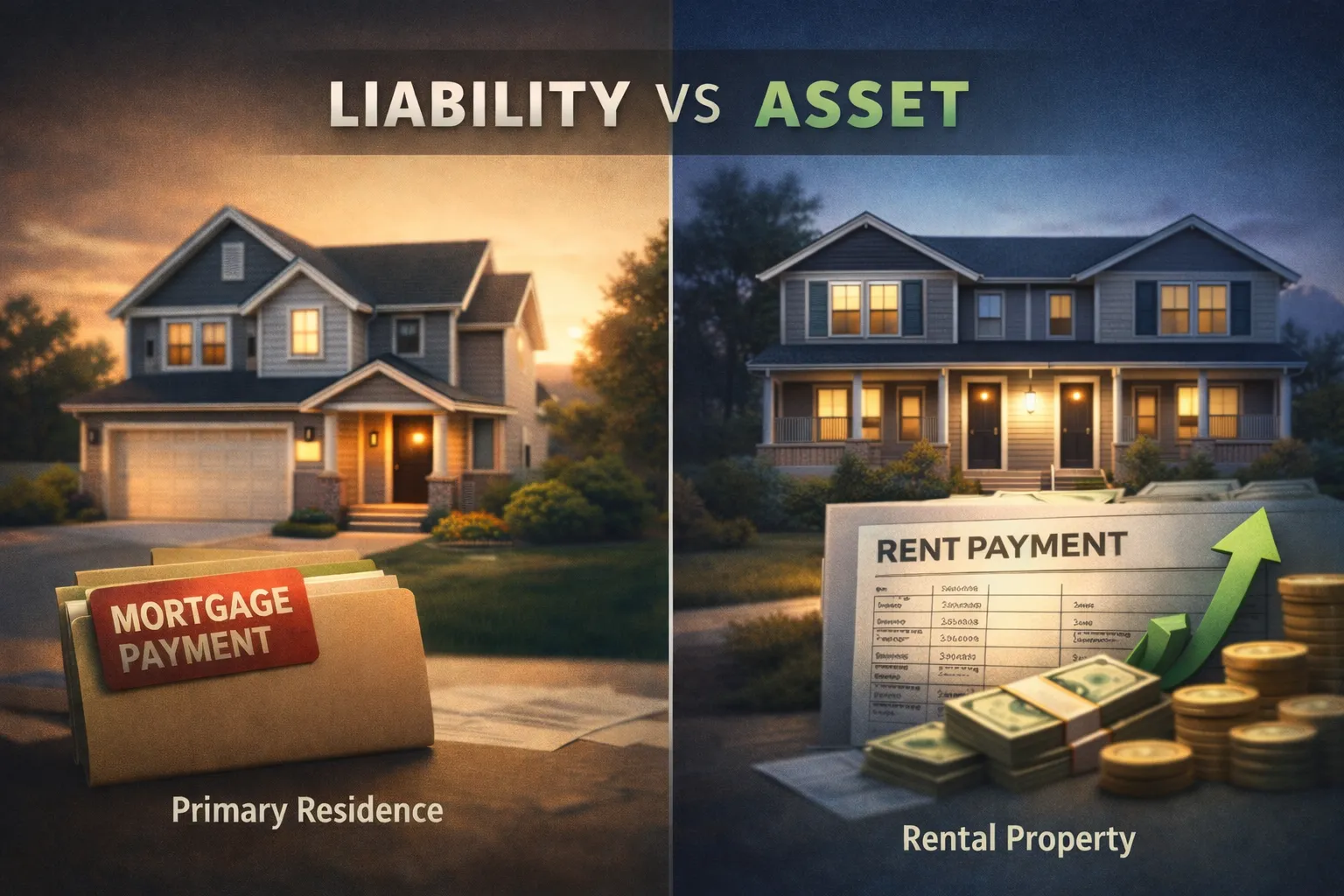 Nobel laureate Robert Shiller spent decades analyzing US home prices. His conclusion: adjusted for inflation, American homes returned almost nothing over the 20th century. The apparent appreciation was mostly the dollar losing value, not homes gaining intrinsic worth. Most people who thought they were building wealth through homeownership were keeping pace with inflation, before maintenance costs. The problem isn't homeownership. It's treating a home like an investment when, by the definition that matters for building wealth, it isn't one.
Two Definitions
The accounting definition of an asset is anything you own with monetary value: your home, your car, your furniture, your stock portfolio. This definition isn't wrong, but it conflates having value with generating value, and that distinction is everything. Your car has value on paper; that doesn't prevent it from draining hundreds of dollars per month in insurance, fuel, and maintenance. Robert Kiyosaki, in Rich Dad Poor Dad, popularized a more useful frame: an asset puts money in your pocket, a liability takes money out. The direction of cash flow is what classifies something, not its resale value. Dividend stocks are assets. Rental properties are assets. Your primary residence, your car, your boat: liabilities, regardless of what they're "worth" on paper.
Your House
When I was buying my first home in 2013, the transaction costs terrified me. Loan origination fees, broker commissions, title insurance, property taxes due at closing: the list of ways to bleed money before you even owned the place felt endless. I asked my agent how anyone could call a house an investment when the acquisition alone cost this much. Her answer surprised me: a house you live in isn't an investment. She owned six properties across multiple states, which at the time made it sound like hypocrisy. It took years to understand she was drawing a distinction I hadn't yet learned to see.
A house that sold for $200,000 in 1990 and again for $600,000 in 2020 sounds like a triple. But accounting for inflation, that $200,000 house needed to reach $485,000-865,000 in 2020 (based on 3-5% inflation) just to break even. Factor in 30 years of mortgage interest (approaching the original purchase price at historical rates), property taxes, insurance, and maintenance, and the net return on a typical primary residence approaches zero or goes negative. Add these carrying costs and the $600,000 sale is a net loss under either inflation scenario.
A rental property carries the same operating costs, but rental income offsets them continuously. When inflation pushes maintenance costs higher, rents typically rise with it, so income scales while the property's appreciation remains structural gain rather than a return already consumed by carrying costs. The tax treatment compounds the difference: repairs on a rental are deductible expenses, and you can depreciate the building against rental income over 27.5 years. On a primary residence, you absorb those same costs with after-tax dollars and get none of the depreciation. The government explicitly subsidizes investment property ownership in ways it doesn't subsidize the house you live in.
House hacking converts the math. The moment part of your home generates rental income (a spare room, a basement unit, an ADU), it begins offsetting carrying costs. In a duplex where you occupy one unit and rent the other, the rental income often covers most or all of the mortgage, turning what was a pure liability into a break-even or cash-flowing asset from day one.
The Asset Spectrum
Rich Dad Poor Dad has sold over 40 million copies and generated roughly equal amounts of devotion and contempt. Both reactions miss the point. The framework Kiyosaki popularized, love him or hate him, is more useful than most personal finance courses: assets put money in your pocket, liabilities take it out. Its weakness is that it's binary. A savings account earning 2% and a financed rental returning 25% are both "assets" by his definition. But they're clearly not in the same ballpark.
| # | Tier | Examples | Cash Position |
|---|---|---|---|
| 1 | Pure liability | Car loans, credit cards, timeshares | Strongly negative |
| 2 | Lifestyle "asset" | Primary residence | Negative, plus slow appreciation |
| 3 | Weak asset | Savings account, bonds, dividend stocks | Mildly positive |
| 4 | Real asset | Rental property, profitable business, royalties | Meaningfully positive |
| 5 | Leveraged asset | Financed rental, real estate with OPM | Asymmetric positive |
Most financial conversations focus on crossing the line from tier 2 to tier 3, from liabilities to income-generating assets. The more impactful distinction is between tier 3 and tier 5. A savings account paying 2% when inflation runs at 5% is technically generating income; it's also destroying purchasing power. A leveraged rental generates 20%+ cash-on-cash returns on the actual capital deployed.
What the Rich Actually Buy
Kiyosaki's most useful illustration shows three cash flow patterns. The poor spend everything they earn. The middle class earns more and channels it into things they believe are assets: the house, the newer car, the lifestyle upgrades that signal success. Then they wonder why their net worth doesn't grow. The wealthy direct income toward true assets and use those returns to acquire more. What Kiyosaki underemphasizes is that the wealthy also use debt differently. For most people, debt is a shortcut to a temporary improvement in one's quality of life. For sophisticated investors, debt is a lever to control more assets. A mortgage on a rental property is a liability on paper. It's also the mechanism that lets you control a $400,000 asset with an $80,000 down payment. When that property generates $2,000/month in net income after all expenses, that "liability" is producing a 30% annual return on invested capital.
The Compound Effect
A liability doesn't only cost what it costs today. Inflation raises maintenance costs every year. A depreciating car keeps consuming insurance and fuel as its resale value falls. The cost compounds as the underlying value deteriorates. Income-producing assets work the opposite direction: $500/month in rental income is $6,000/year available for the next down payment, which funds a second asset generating more income. Every dollar trapped in a liability competes against every dollar that could be compounding inside an asset. The gap between someone who starts buying assets at 25 and someone who starts at 35 isn't 10 years: it's one full compounding cycle at the steepest point on the curve.
The Buying Test
Before any purchase, one question covers most of the ground: does this put money in my pocket or take money out? If it's an asset, what's the return on investment, can I leverage it, and what's the tax treatment? If it's a lifestyle purchase, can I fund it from passive income rather than active income? The rule I try to live by: buy assets with active income, buy toys with passive income. My working years are finite. Every dollar of active income I put into a liability is a dollar that won't be compounding inside an asset five years from now. The next question is how to compare the assets worth acquiring. That's what the 9-Lens Framework covers.
